
Is Latex Better Than Leather? The Ultimate Fashion Showdown


In the world of alternative fashion, two materials reign supreme: Latex and Leather. They both promise a rebellious, second-skin aesthetic that turns heads. But if you are ready to invest in your next statement piece, you might be asking: Is latex actually better than leather?
So, is latex better than leather? The answer depends on most: the timeless durability of animal hide or the futuristic, unapologetic shine of liquid rubber. As specialists in high-end latex fashion, we are breaking down the critical differences to help you decide.
1. The Look: Organic Texture vs. Liquid Shine
Leather is famous for its texture. Even the smoothest leather has a grain. It absorbs light rather than reflecting it (unless it is patent leather), giving it a rugged, classic “rock and roll” vibe.
- The Leather Aesthetic: Structured, matte to satin finish, develops a unique “patina” (worn look) over years.
Latex, however, creates a visual impact that leather simply cannot match. It is a non-porous material that can be polished to a mirror-like finish.
- The Latex Aesthetic: Seamless, futuristic, and high-gloss. It looks like liquid poured directly over the body, highlighting every curve with absolute precision.
Winner for Visual Impact: Latex. If your goal is to be the center of attention, the high-gloss shine of latex is unbeatable.
2. The Feel: Breathability vs. The “Second Skin” Sensation
This is the most drastic difference between the two.
- Leather: Being a natural skin, leather is porous. It breathes (to an extent) and warms up to your body temperature comfortably. It is stiff at first but “breaks in” over time, molding to your shape like a well-worn shoe.
- Latex: Latex does not breathe. It is an insulator. Wearing it creates a unique sensory experience often described as a “tight hug.” It compresses the body, smoothing out the silhouette.
- Note: Because it traps heat, latex is best suited for cooler environments or club nights, whereas leather can be worn as daily street fashion.
3. Getting It On: The Ritual
Leather is easy. You zip it up, and you go.
Latex requires a ritual. Because raw latex is tacky (sticky), you cannot just pull it on. You need a dressing aid—either talcum powder or silicone oil—to slide it over your skin.
- Pro Tip: For those who love the look but hate the hassle, look for Chlorinated Latex. This chemical process makes the latex permanently smooth and silky, allowing you to slide into it without any oil or powder, rivaling the ease of leather.
4. Care and Maintenance: Patina vs. Polish
- Leather: Low maintenance. It needs occasional conditioning to prevent drying out, but it can handle rain, rough wear, and simply hanging in a closet for months.
- Latex: High maintenance, high reward. Latex is a living material derived from the rubber tree (Hevea brasiliensis).
- UV Light: Sunlight is latex’s enemy. It must be stored in the dark.
- Metals: Copper and brass can stain lighter latex colors permanently.
- Shining: To keep that “wet look,” you need to polish it with silicone oil.
5. Sustainability: The Vegan Factor
Here is a point many overlook. Leather is a byproduct of the meat industry and involves tanning processes that can be chemically intensive.
Latex is a natural, plant-based product. It is harvested by tapping rubber trees without harming them (similar to maple syrup).
- Eco-Verdict: Latex is biodegradable and 100% Vegan. For the eco-conscious fashionista who wants a natural material without animal cruelty, latex is the superior ethical choice.
6. Price vs. Value: The Real Cost
When looking at the price tag, leather often seems more expensive at first glance, but the math changes when you consider longevity.
- Leather (The Long-Term Investment): High-quality authentic leather commands a higher upfront price (often $300 – $1,000+ for a good jacket) due to the cost of raw hides and tanning. However, because leather is nearly indestructible and lasts for decades, your “Cost Per Wear” is extremely low. It is a one-time purchase that serves you for life.
- Latex (The Aesthetic Investment): Latex is generally more accessible, with high-quality pieces ranging from $150 – $600. However, remember that latex is handmade; every seam is glued by hand, justifying the labor cost.
- Hidden Costs: Be sure to factor in the cost of maintenance products (dressing aid, polish, cleaner) and the reality that latex has a shorter lifespan (2-5 years). You are paying for the exclusive look, not just the material.
Quick Comparison: Latex vs. Leather at a Glance
| Feature | Latex | Leather |
| Visual Finish | High Gloss / Mirror-like Shine | Matte / Satin / Textured |
| Breathability | None (Insulator / High Heat) | Moderate (Breathable / Porous) |
| Stretch & Fit | High Elasticity (Compresses body) | Low Stretch (Molds to body) |
| Dressing | Needs Aid (Oil/Powder) or Chlorination | Easy (Zip-and-Go) |
| Maintenance | High (Wash & Polish after use) | Low (Occasional Conditioning) |
| Price & Value | Moderate ($$) but higher upkeep cost | High ($$$) but better long-term value |
| Sustainability | Vegan & Biodegradable (Plant-based) | Animal Product (Byproduct) |
| Durability | Delicate (Prone to rips/UV damage) | Very High (Lasts decades) |
| Best For | Statement Pieces / Fetish / Clubwear | Daily Wear / Biker / Classic Style |
Conclusion: Is Latex Better Than Leather?
- Choose Leather IF: You want a low-maintenance, breathable garment for daily street wear that will last for 20 years with minimal effort.
- Choose Latex IF: You want the ultimate aesthetic impact. Nothing rivals the shine, the compression, and the sensory feeling of latex. It is not just clothing; it is an experience.
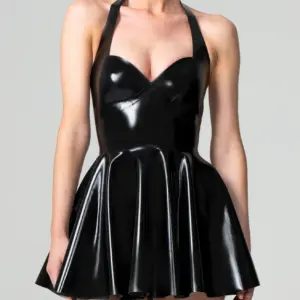
Latex Halter Sweetheart Mini Dress with Flared Skirt – Black
$199.00$129.00-35% OFFZip Up Latex Dress – Gold Hardware & Belt | Latex Luxe
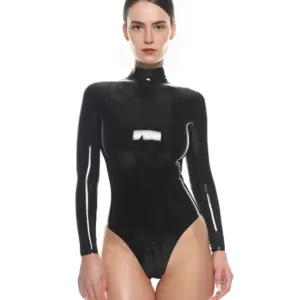
$229.00$139.00-39% OFFHigh-Neck Glossy Latex Bodysuit with Crotch Zip and Long Sleeves
$219.00$149.00-32% OFFMetallic Green Latex Bodysuit with High Neck and Back Zipper
$259.00$169.00-35% OFF