
How to Wash Latex Clothing: The Ultimate Guide (Step-by-Step)

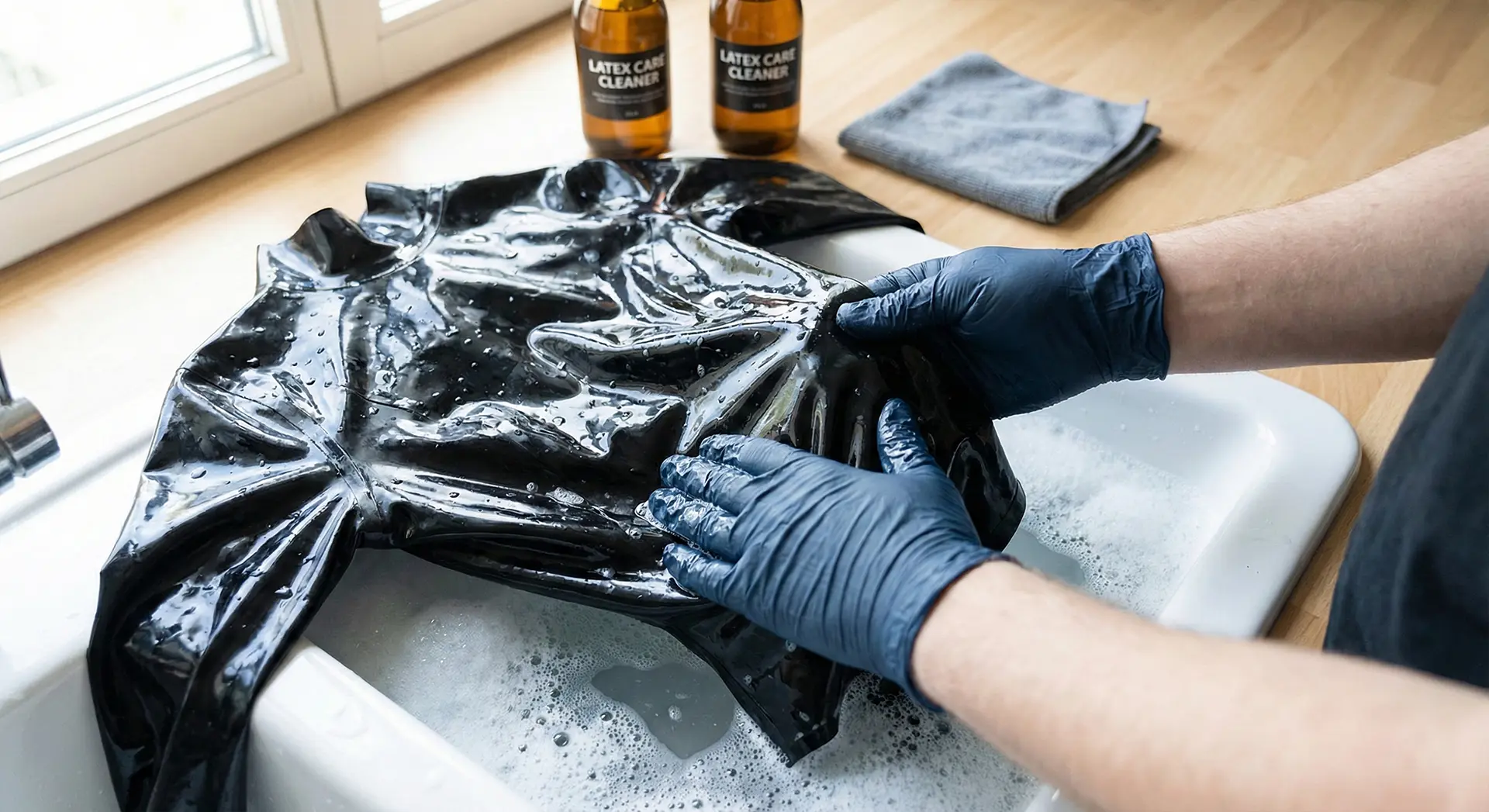
Many beginners don’t know how to wash latex clothing properly and are terrified of ruining it. They’ve heard horror stories of it melting, sticking together, or losing its shine forever. But here is the truth: sweat is the number one enemy of latex. You need to wash your garments after every single wear. Body oils, sweat, and bacteria trapped inside will cause the rubber to rot, weaken, and smell over time. The good news — washing latex is easier than doing regular laundry. It takes less than 10 minutes if you know the right technique.
What You Need Before You Wash Latex Clothing
- A clean basin or bathtub: Free of residue from harsh household cleaners.
- Lukewarm water: Approx 30–40°C (86–104°F). Never use hot water — if it burns your hand, it will damage your latex.
- Clear, dye-free dish soap or latex cleaner: Never use coloured soaps (blue soap can permanently tint black latex), regular laundry detergent, bleach, or fabric softeners.
- Silicone Oil or Latex Shiner: The secret ingredient for the Shine Dip method in Step 3.
- Microfibre towels.
Step 1: The Soak and Cleanse
Pro Tip: Before wetting the garment, inspect it for any small rips or tears. Washing a damaged item can cause tears to spread. If you find one, repair it first.
- Fill your basin with lukewarm water.
- Add a few drops of clear dish soap or specialised latex cleaner. Agitate to create bubbles.
- Turn your garment INSIDE OUT. Sweat and skin oils build up on the inside — not the outside.
- Submerge the garment completely. Gently swish it around.
- Use the pads of your fingers to gently rub high-sweat areas — armpits and crotch.
- Never scrub with a coarse sponge or brush — this leaves permanent micro-scratches on the surface.
Step 2: The Rinse
- Drain the soapy water.
- Refill with cool, fresh water.
- Swish the garment to rinse thoroughly. Repeat twice.
- Why this matters: Any soap residue left on the rubber will cause dull spots or white streaks once it dries.
Step 3: The Shine Dip — The Pro Secret
Most beginners skip this step and end up with sticky latex that tears easily. Clean, wet rubber has high friction — it will stick to itself like superglue once it dries. Do this while it is still wet:
- Fill the basin with clean, cool water one last time.
- Add a capful of Vivishine silicone oil or high-quality latex polish. Mix it in.
- Dip your garment and swish for about 30 seconds. The oil will evenly coat the entire surface.
- Remove the garment — do not rinse again. You want that protective oil layer to stay on.
Step 4: Drying Without Damage — The Burrito Method
- Give the garment a gentle shake to remove excess water.
- The Burrito Method: Lay the garment flat on a dry towel. Roll the towel tightly with the latex inside. Press gently to absorb 90% of moisture instantly.
- Unroll and hang on a thick plastic hanger — never wire or metal hangers, which can leave permanent rust-coloured stains.
- Air dry in a dark, shaded spot — never in direct sunlight. UV rays make latex brittle within hours. Because you did the Shine Dip, the latex won’t stick to itself while drying.
Step 5: Storage — The Key to Long-Term Condition
Correct storage protects your latex from damage, prevents sticking, and keeps it ready for next wear. Follow these rules every time:
- Ensure completely dry: Never store latex that is even slightly damp — this causes mould and material degradation.
- Dust with talcum powder: Lightly dust inside and outside to prevent the latex from sticking to itself during storage.
- Store individually: Keep each piece in its own opaque garment bag to protect from light, dust, and colour transfer between different coloured garments.
- Hang, don’t fold: Hang garments in a cool, dark, dry place. If you must fold, do so loosely and never place anything heavy on top — this creates permanent creases.
- Keep away from metals: Copper, brass, and bronze cause permanent dark stains on latex. Keep garments away from metal hangers, jewellery, and belt buckles. Always use plastic or padded hangers.
5 Common Mistakes to Avoid When You Wash Latex Clothing
- Mistake 1: Drying in sunlight. UV rays make latex brittle and discoloured within hours. Always dry in a dark, shaded indoor spot.
- Mistake 2: Using metal hangers. Metal reacts chemically with latex and leaves permanent rust-coloured stains. Always use wide plastic hangers.
- Mistake 3: Wringing it out. Never twist or wring latex. This stresses the seams and causes tearing or permanent shape loss.
- Mistake 4: Using oil-based products. Baby oil, Vaseline, and petroleum jelly permanently degrade and dissolve natural rubber latex.
- Mistake 5: Using coloured dish soap. Blue or coloured soaps can permanently tint black latex. Always use clear, dye-free soap or a specialist latex cleaner.
Regular Maintenance: Keeping the Shine Long-Term
Beyond washing, regular conditioning is what gives latex its iconic high-gloss finish and keeps the material supple over years of wear:
- Apply latex shiner before every wear: Spray onto a soft lint-free cloth and wipe evenly across the entire surface. This creates a brilliant shine and adds a protective layer.
- Conduct regular inspections: Periodically check pieces for early signs of wear — small tears or discolouration — so you can address them before they become serious. Small tears can be repaired with latex adhesive if caught early.
- Keep away from perfumes and lotions: All oil-based products will break down the material and cause permanent damage.
Ready to dress after care? Read our guide on how to put on latex clothing for full dressing technique advice.
Frequently Asked Questions About Washing Latex Clothing
How often should I wash latex clothing?
After every single wear without exception. Body oils, sweat, and bacteria trapped inside the garment will cause the rubber to rot and weaken over time if not removed promptly.
Can I machine wash latex clothing?
Never. Machine washing will permanently damage latex — the agitation tears the material, the heat degrades the rubber, and detergent chemicals corrode the surface. Always hand-wash in lukewarm water.
What soap is safe to use on latex clothing?
Use a clear, dye-free dish soap or a specialist latex cleaning solution. Never use coloured soaps, regular laundry detergent, bleach, fabric softeners, or anything oil-based. When in doubt, a dedicated latex cleaner is always the safest choice.
How do I stop latex from sticking to itself after washing?
Use the Shine Dip method in Step 3 — add a capful of silicone oil to the final rinse water and dip the garment before drying. This coats the entire surface evenly and prevents sticking. A light dusting of talcum powder before storage also helps.
How long does latex clothing last with proper care?
With proper care, high-quality latex lasts 3–5 years or longer. The main enemies are UV light, oil-based products, metal contact, and improper storage. Follow the steps above consistently and your pieces will stay pristine for years.
-
Latex Halter Sweetheart Mini Dress with Flared Skirt – Black
$199.00$129.00-35% OFF -
Zip Up Latex Dress – Gold Hardware & Belt | Latex Luxe
$229.00$139.00-39% OFF -
Translucent High Neck Latex Bodysuit – Crotch Zip & Long Sleeves
$219.00$149.00-32% OFF -
Metallic Green Latex Bodysuit with High Neck and Back Zipper
$259.00$169.00-35% OFF




[…] on? Read our guide on how to wash latex clothing to keep it in perfect condition after every […]
[…] For a complete breakdown, read our full latex care guide. […]
[…] For a full breakdown, read our complete latex care guide. […]
[…] For a full breakdown of latex care, read our complete latex care guide. […]
[…] With proper care, your first latex piece will last for years. For a full breakdown, read our complete latex care guide. […]
[…] For a full breakdown, read our complete latex care guide. […]
[…] Always wash in lukewarm water with a mild latex-safe soap after every wear. Pat dry, never tumble dry. Store in a cool, dark place away from metal objects. Apply a silicone-based shiner before wearing for the signature high-gloss finish. Full details in our latex care guide. […]
[…] dust lightly with talcum powder and store in a cool, dark place away from metal objects. Read our complete latex care guide for full […]
[…] For a full breakdown, read our complete latex care guide. […]
[…] For a full breakdown, read our complete latex care guide. […]
[…] For a full breakdown, read our complete latex care guide. […]
[…] to staining from metals and dyed fabrics, so extra care in storage is important. Read our complete latex care guide for full […]
[…] For a full breakdown, read our complete latex care guide. […]